AstroPlotorium User Manual
These are the pictures the Main View menu and the 3D navigator are built around. Each one is the same app, pointed at a different kind of scene. The chapters linked under a picture explain the controls.
2D Celestial Sphere
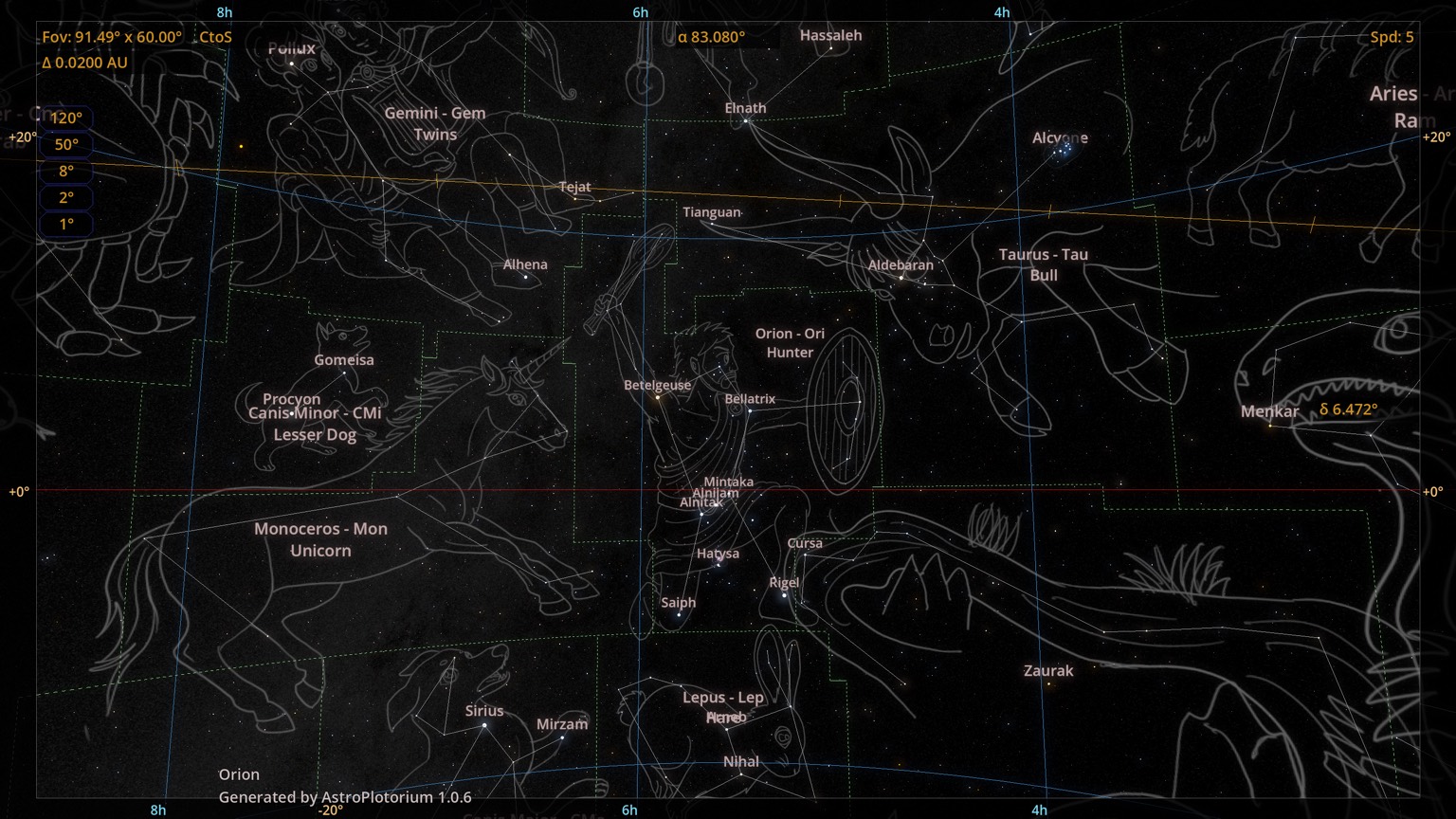
The whole sky as a chart, including objects below your horizon. See Main views.
2D Celestial Sphere - Zoom in
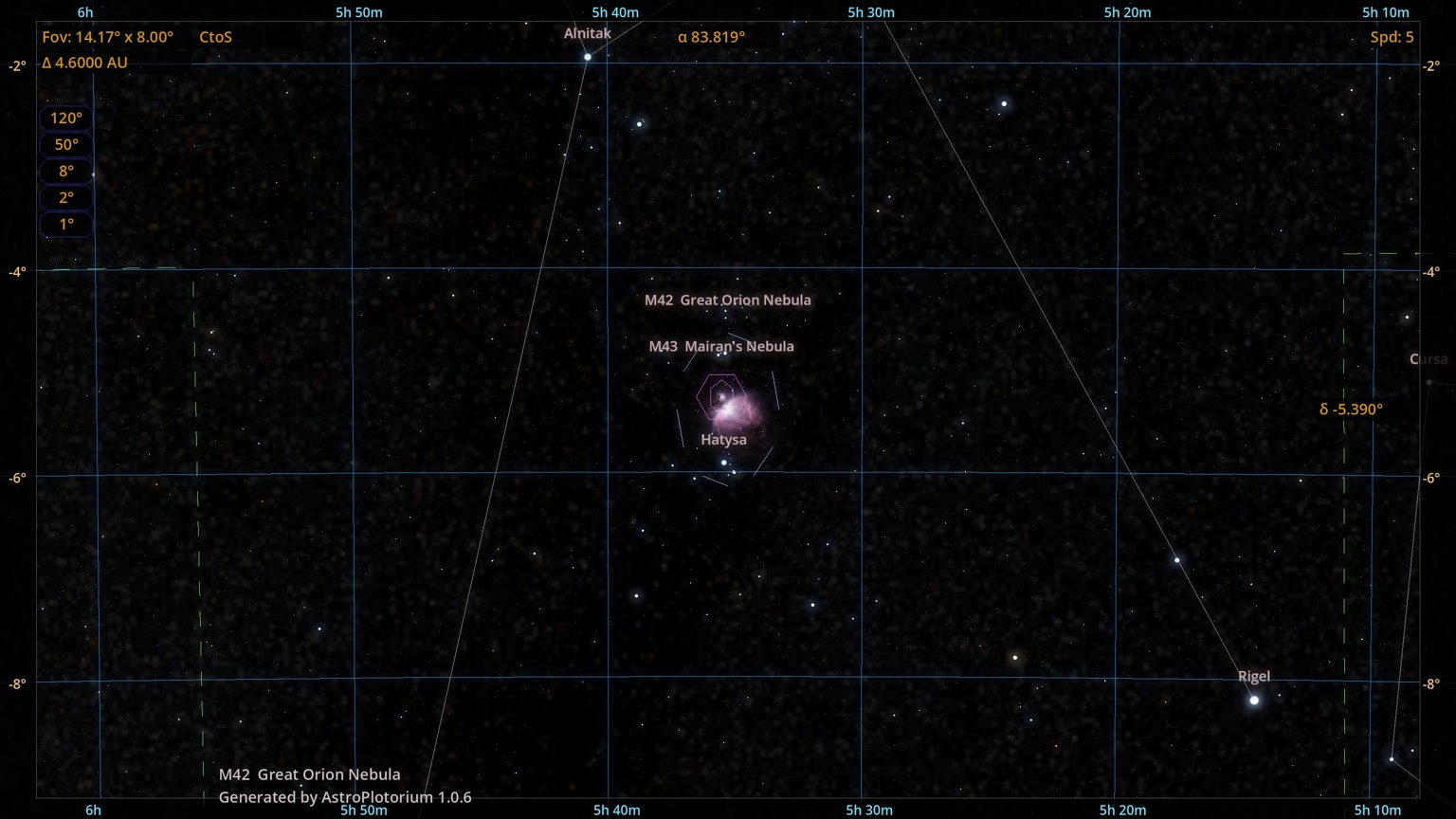
A narrow field on the same sphere. Press Enter on a target to jump in, and Enter again to jump back. See Camera and field of view.
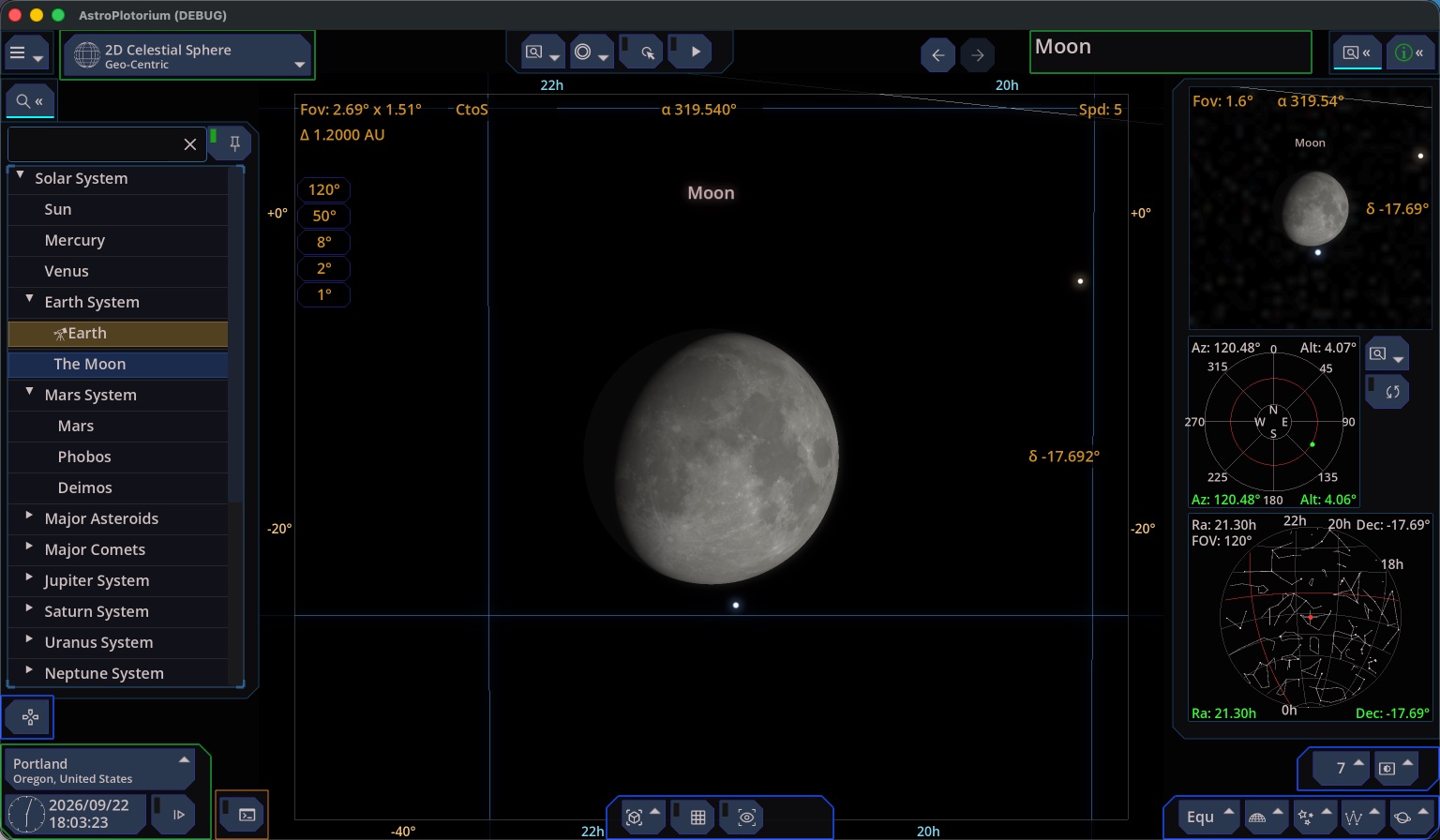
Same view, the Moon.
2D Planetarium
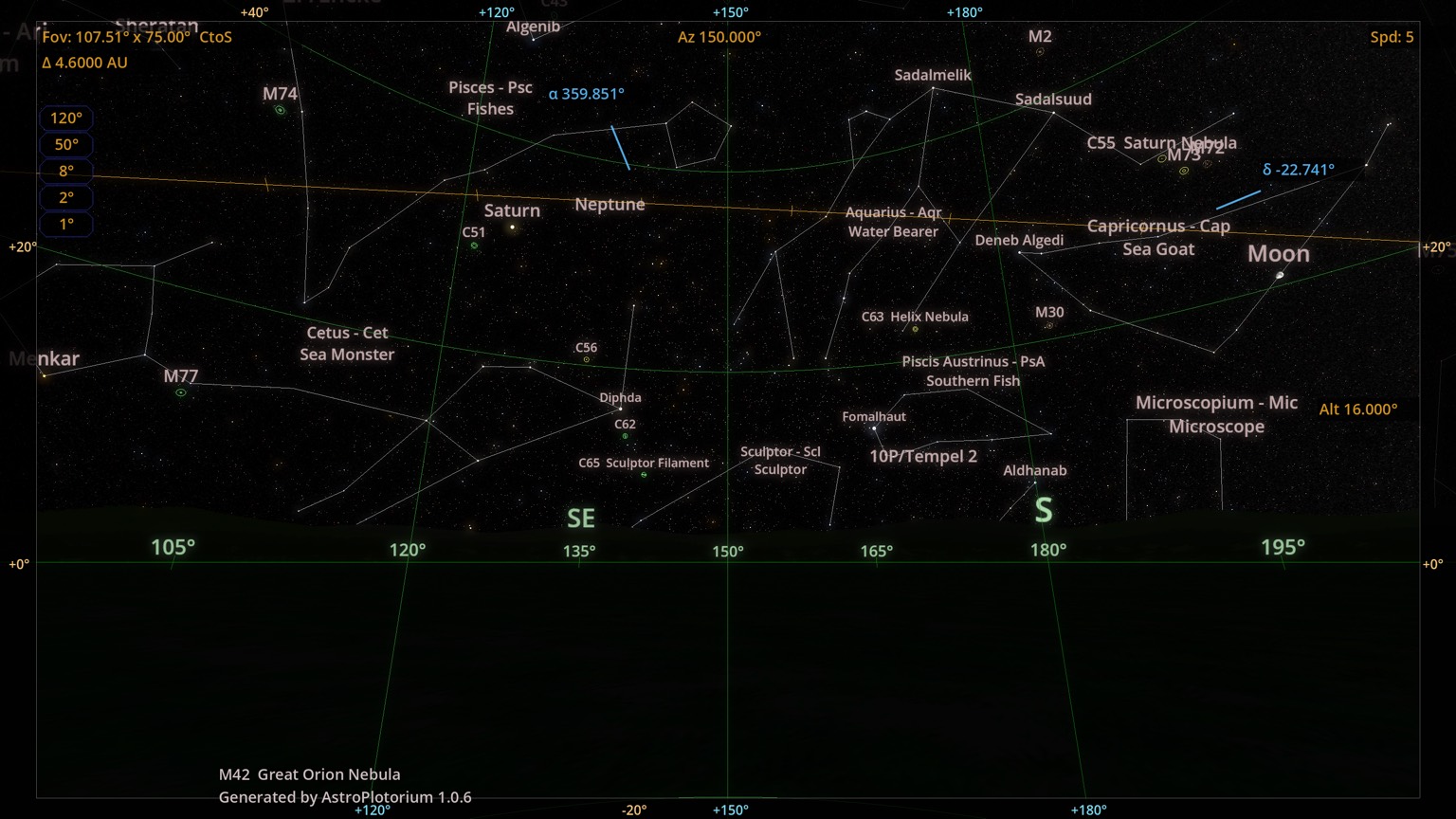
The local sky from your site, with the ground and the horizon. See Main views.
2D Planetarium - Sunset
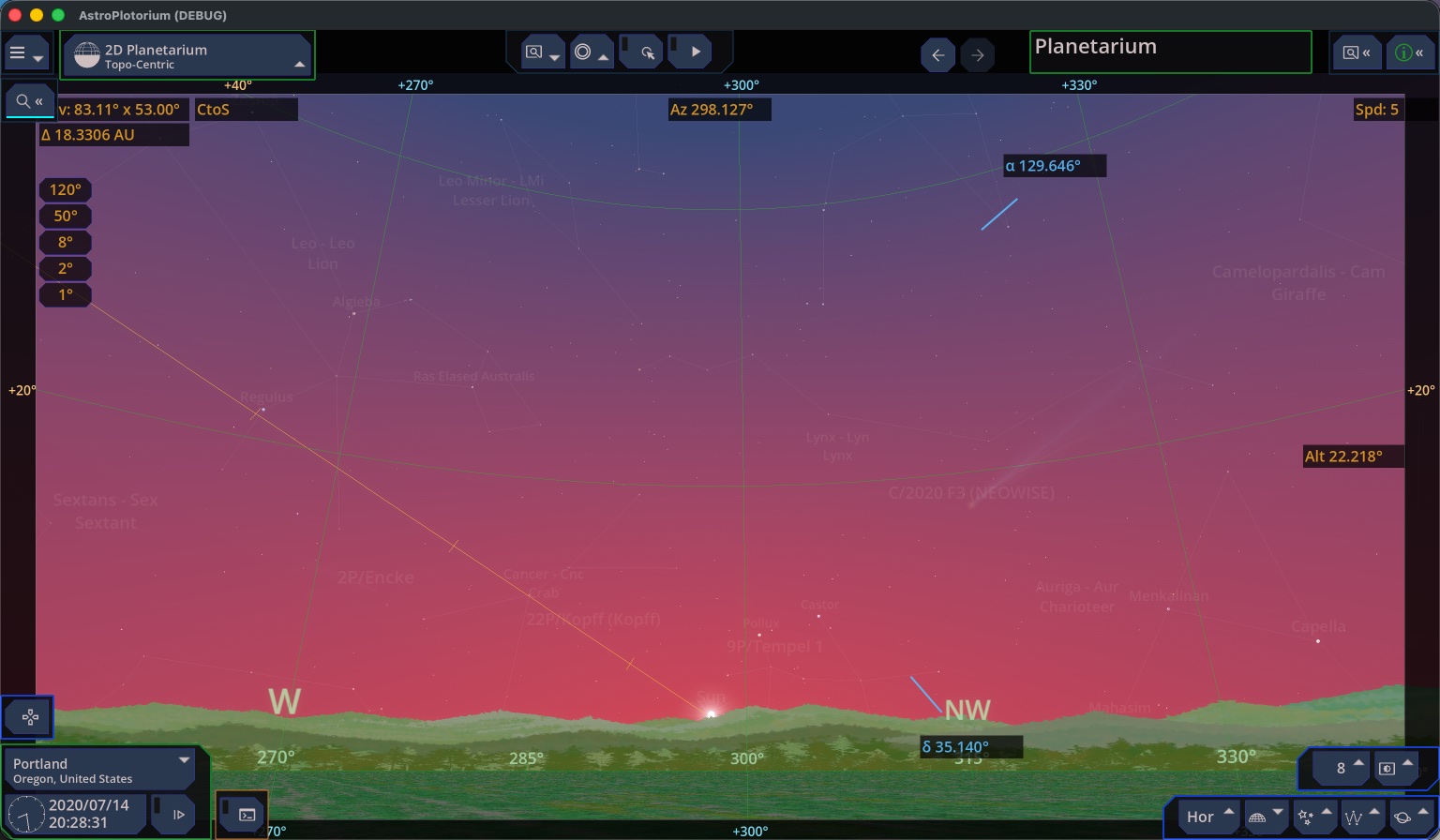
The same view at sunset, with the atmosphere and the landscape. See Themes and landscape.
Ephemeris
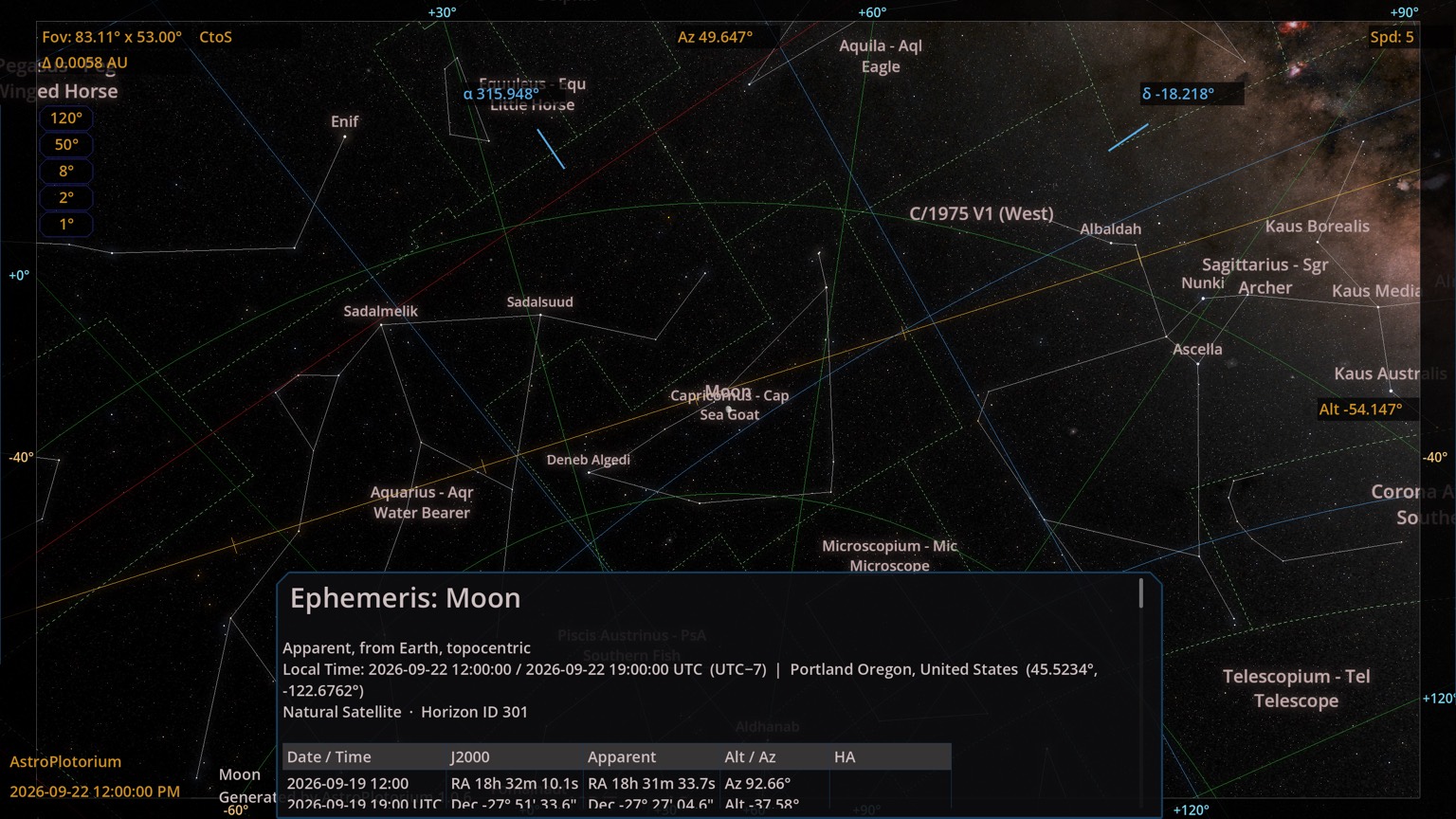
A table of where the selected object sits over the next local days. See Ephemeris and planisphere.
2D Planisphere
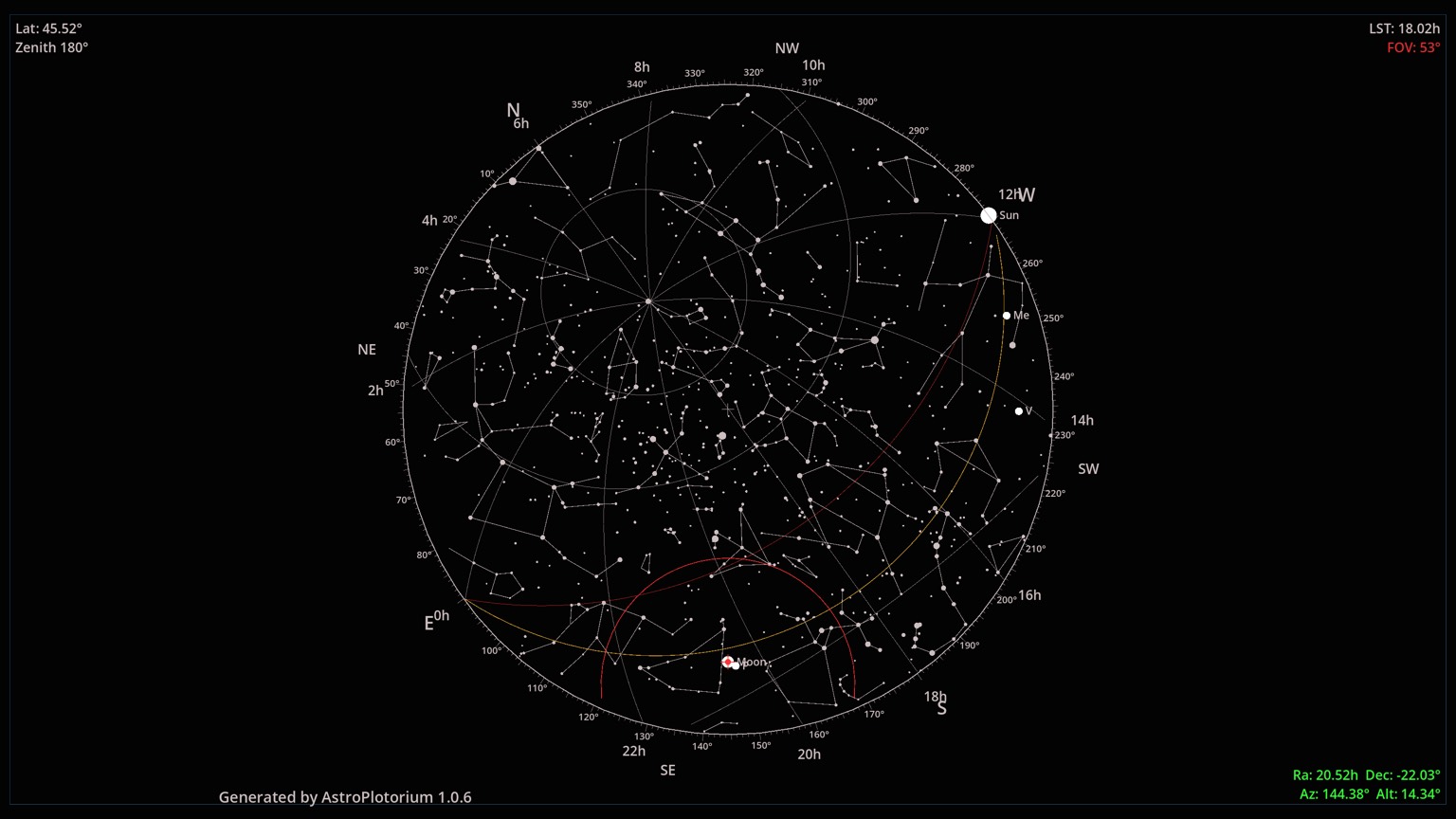
A star wheel for your latitude and the clock. See Ephemeris and planisphere.
3D Universe
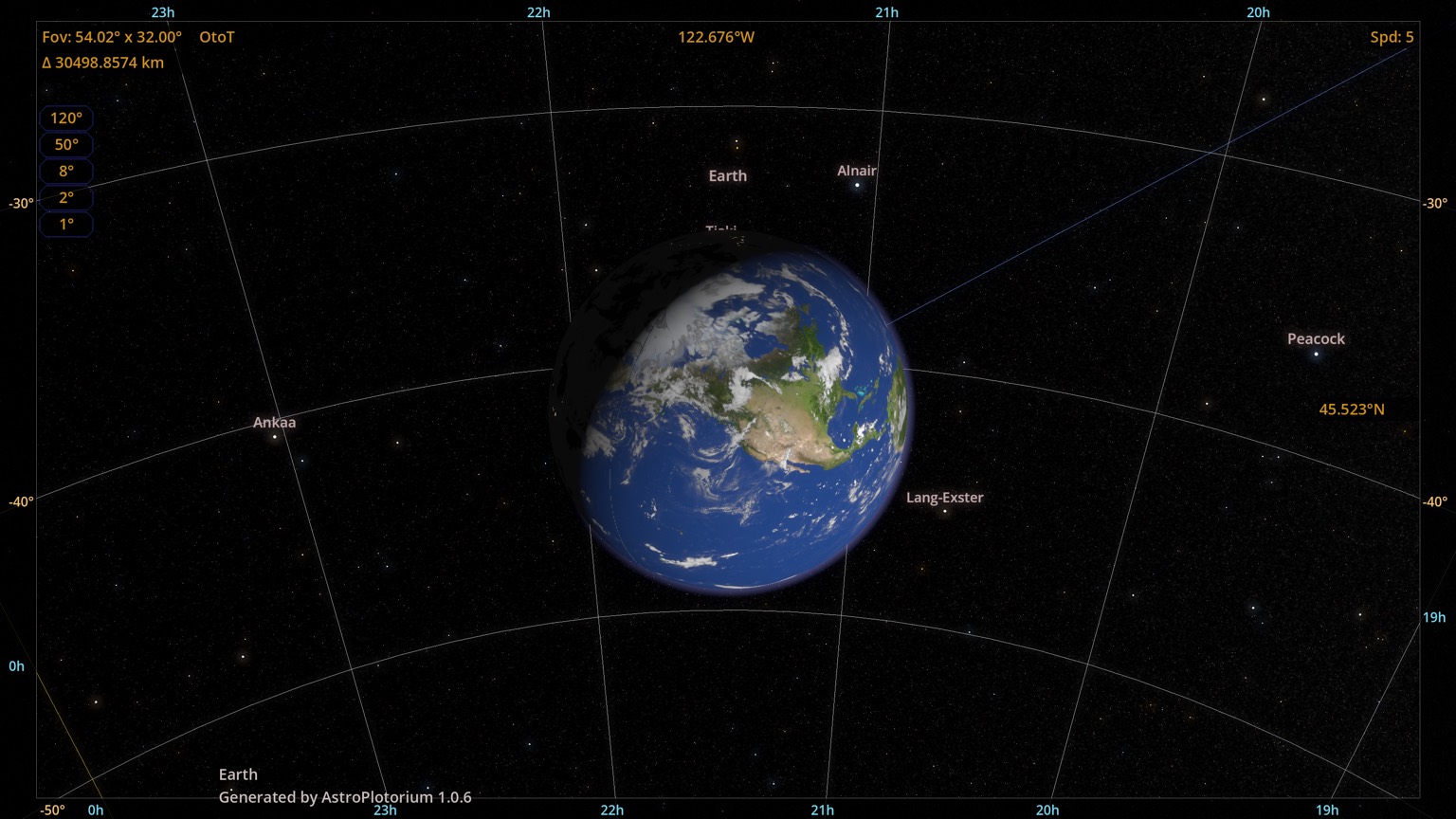
A body you can orbit in the scaled scene. See 3D universe.
3D Solar System
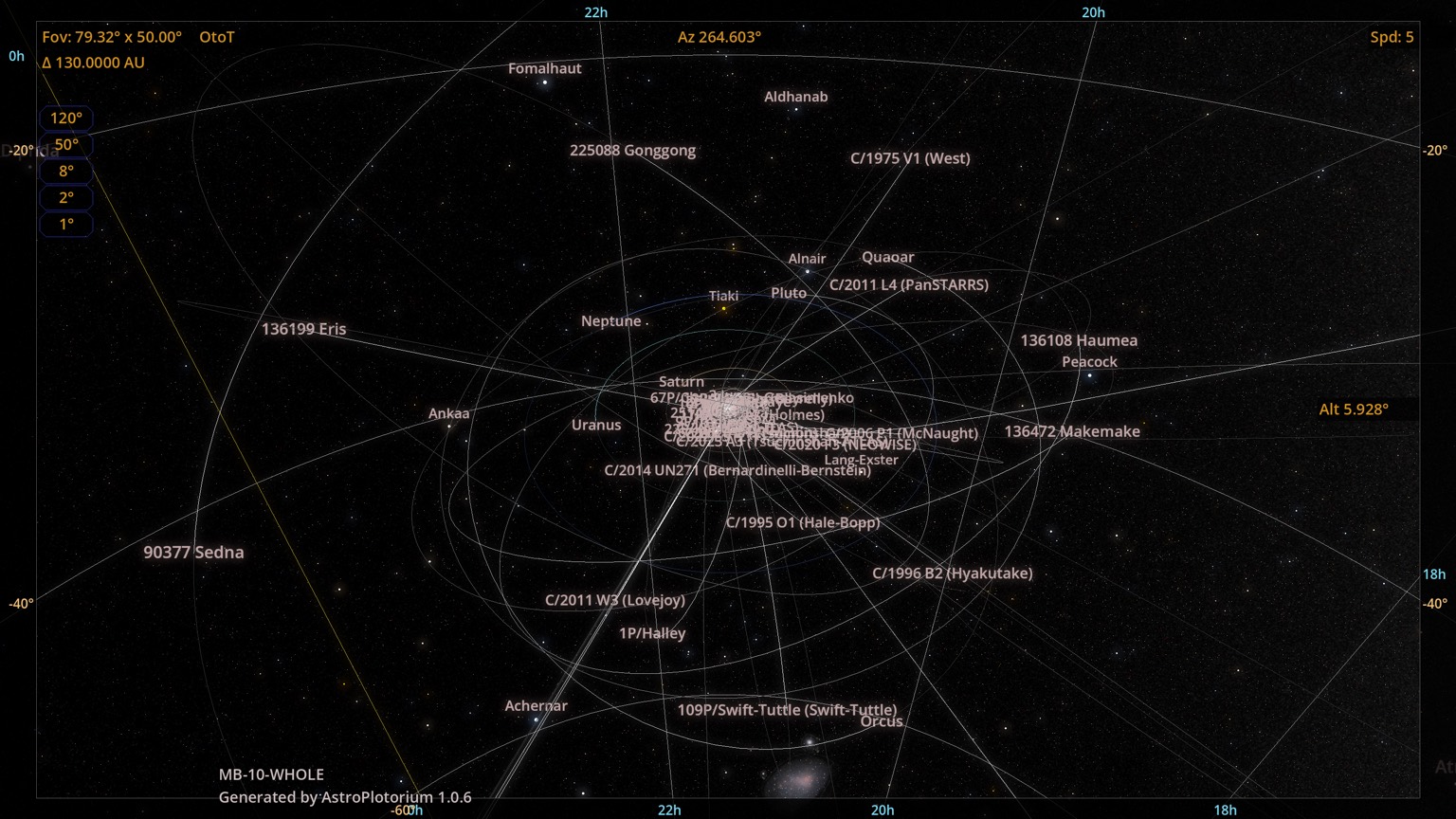
The planets, dwarf planets, and comet paths in one spatial view. Distances are compressed so the system fits. See The solar system.
2D Solar System
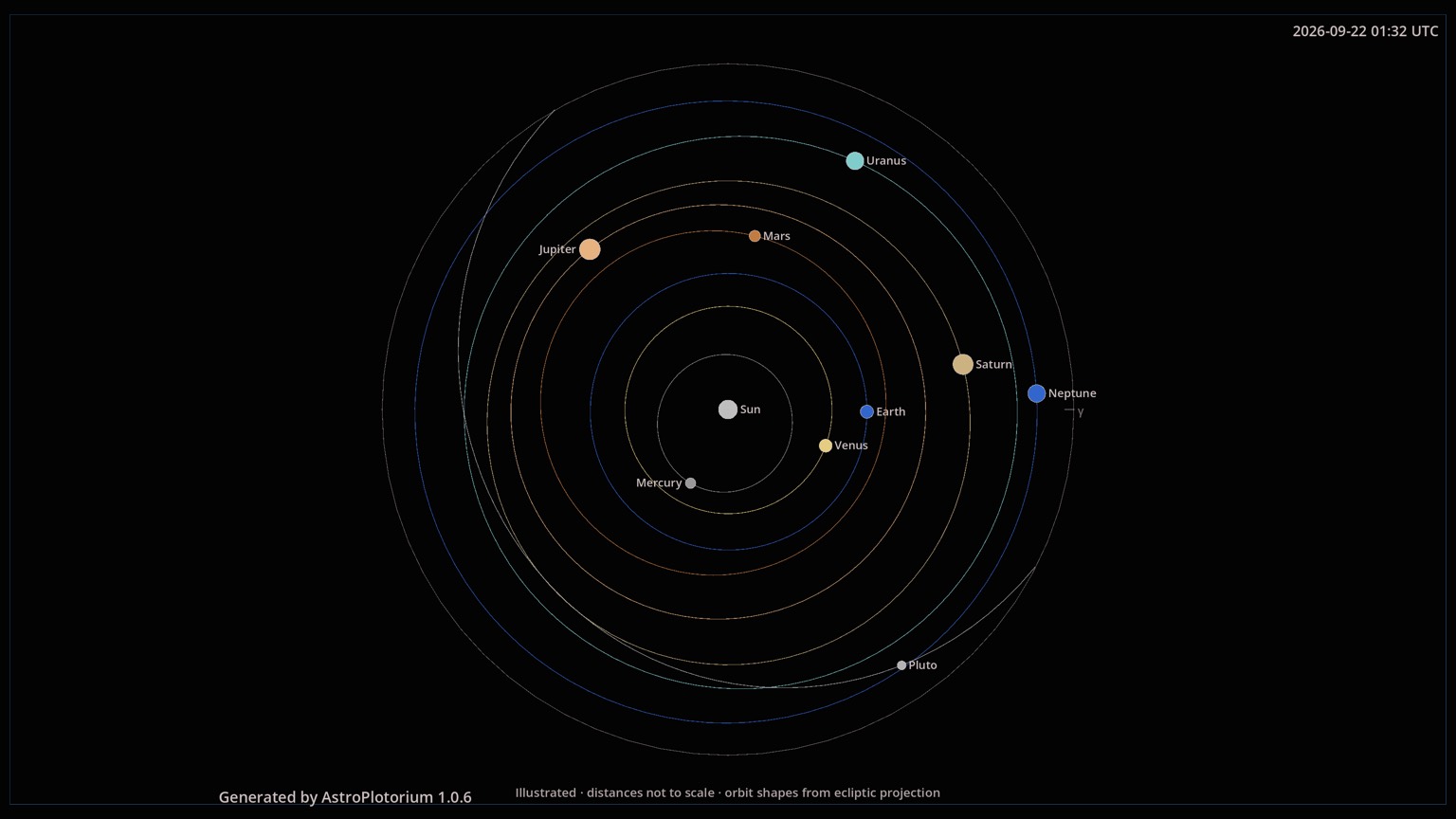
A flat diagram of where the planets are. Orbit shapes are real; the spacing between rings is not a ruler for AU. See The solar system.
3D Orbit Flying
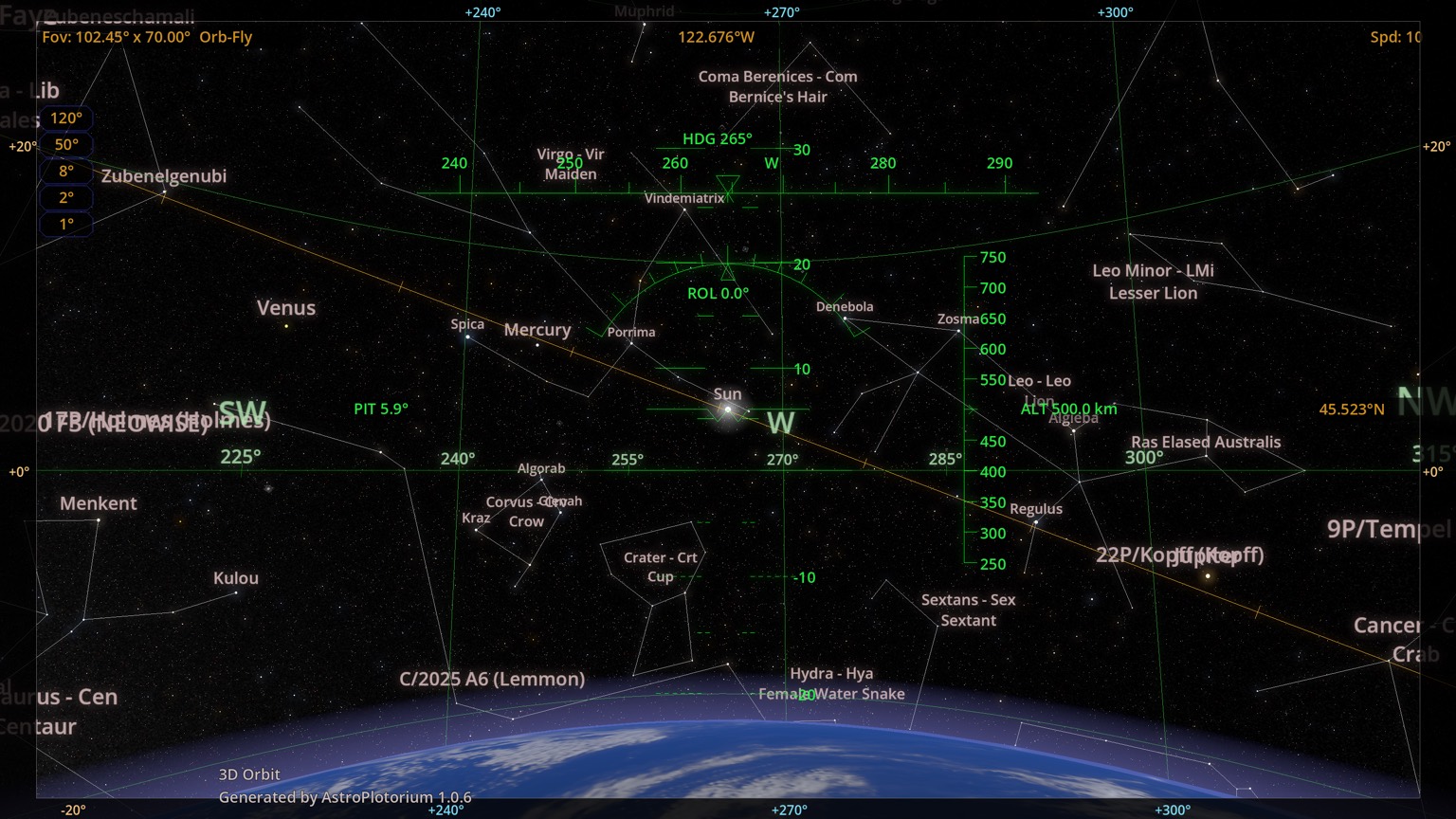
The view from altitude, with heading, pitch, and height on the flight tapes. See 3D Orbit.
Milky Way 3D
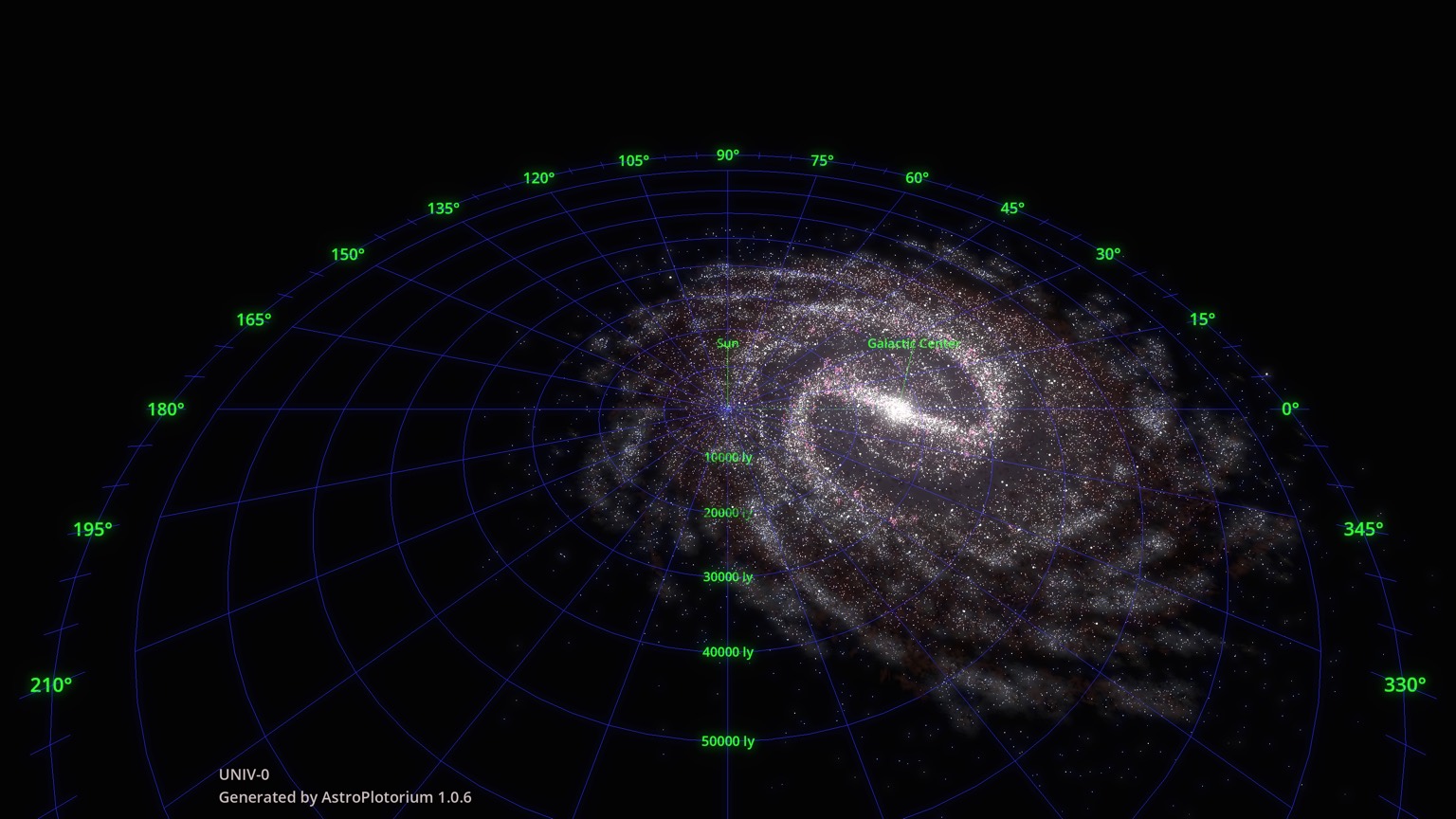
The galaxy model, with the Sun’s place in it. See 3D universe.
Open Cluster 3D
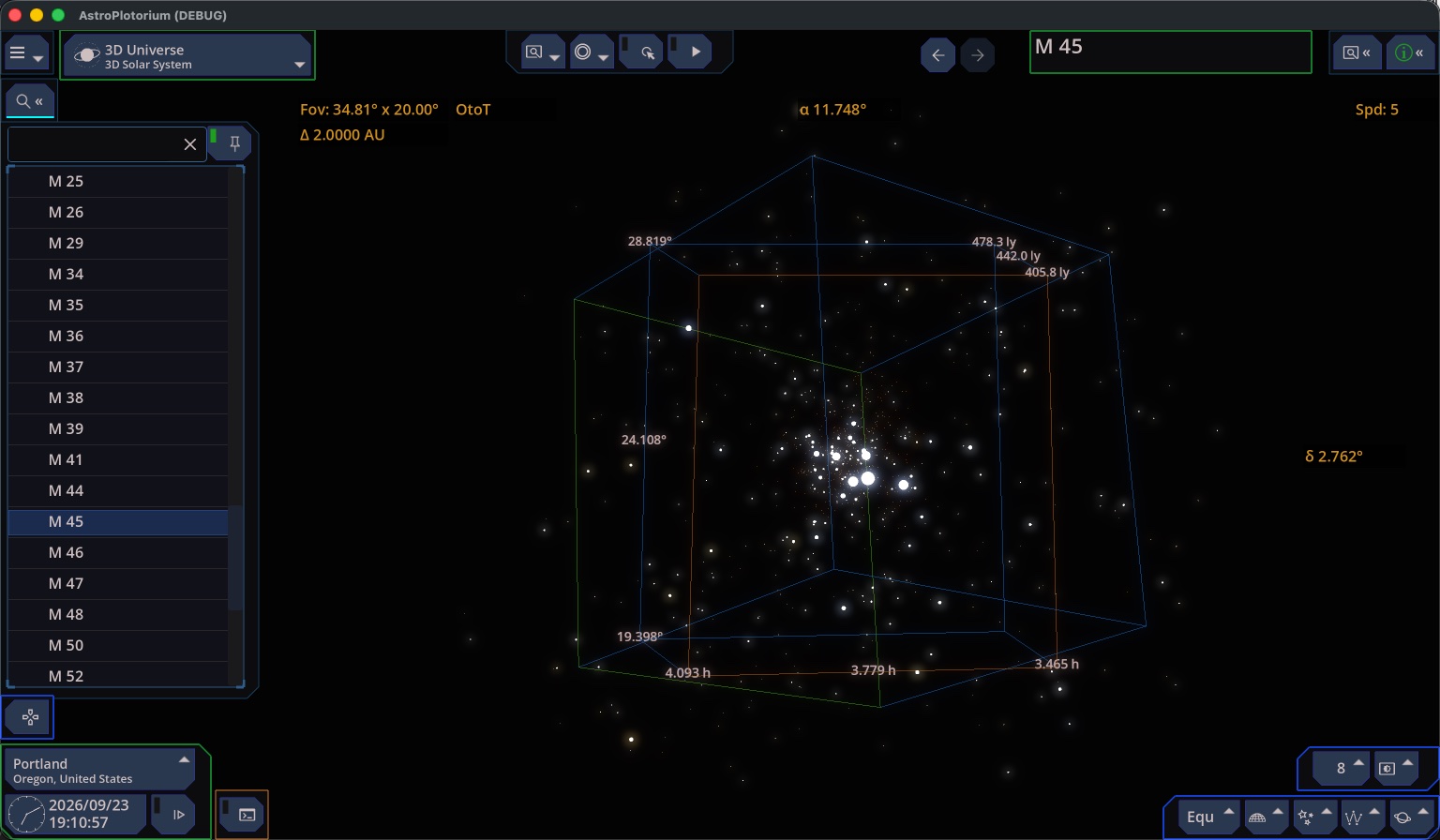
Member stars of a cluster in space, so the group has a depth. This one is the Pleiades. See 3D universe.
Nearby Stars Chart 3D
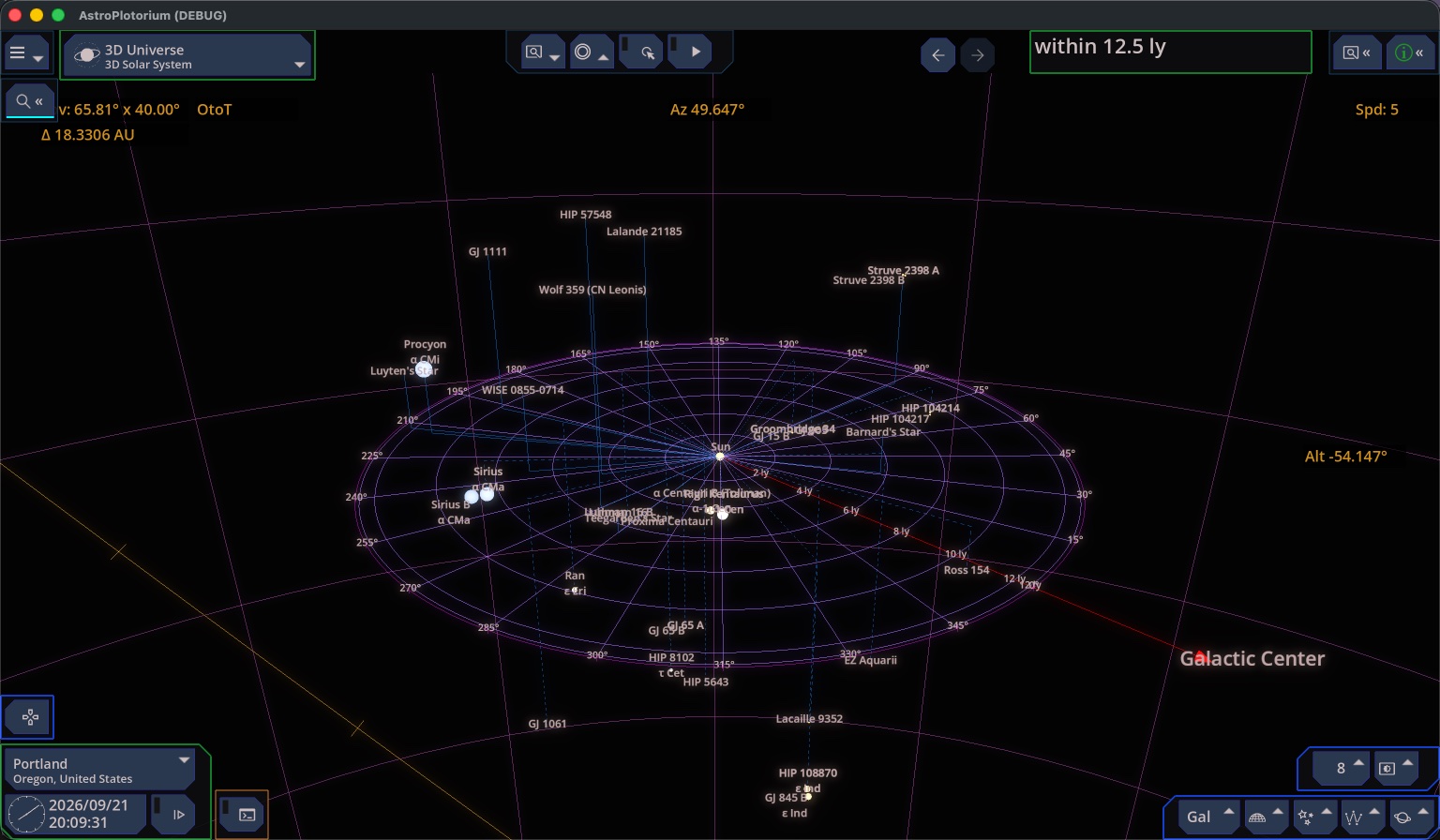
Catalog stars inside a distance shell. This shell is 12.5 light-years. See 3D universe.
Oort Cloud 3D
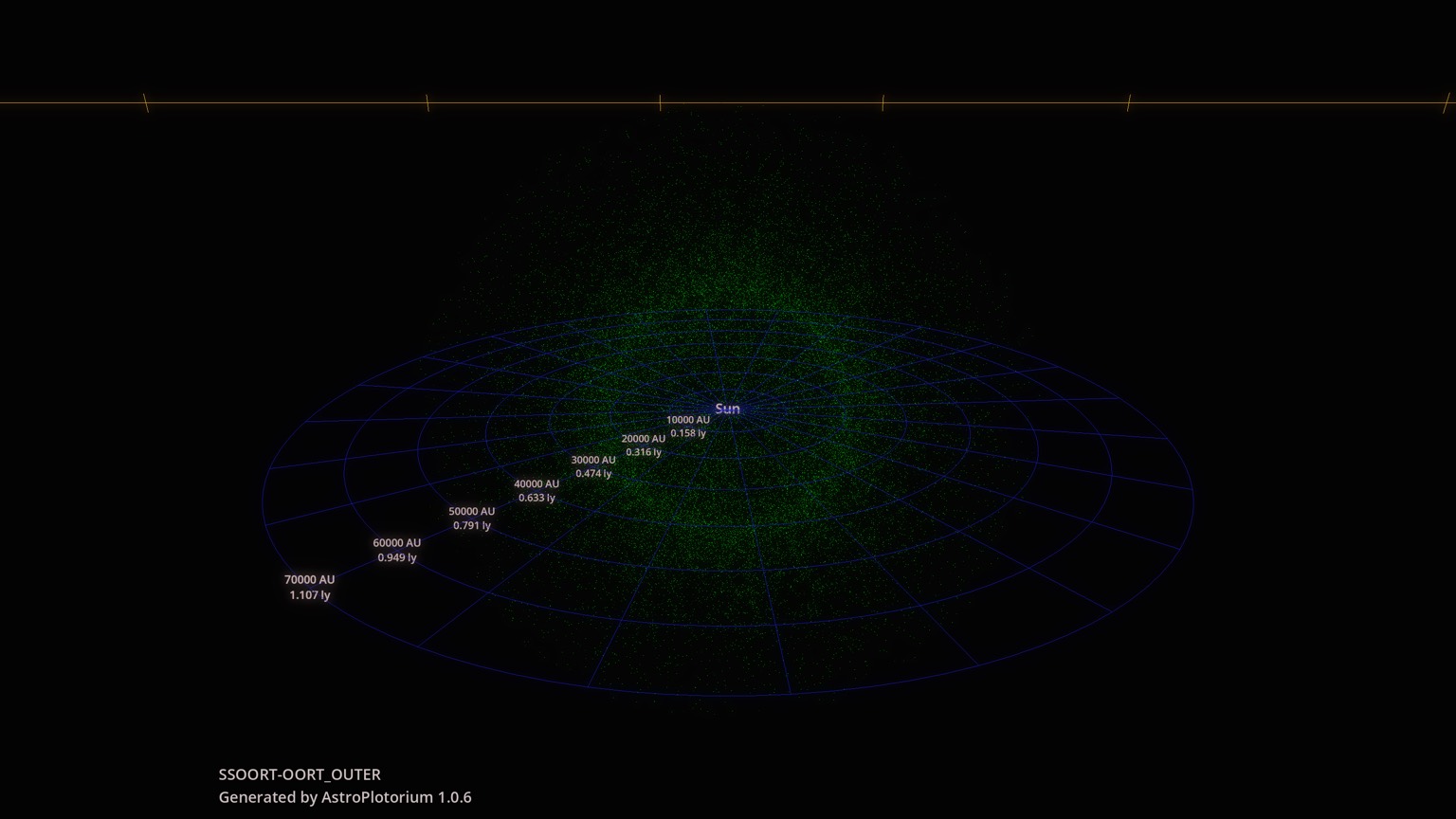
A volume for the outer Oort cloud, not a dot for every known object. See 3D universe.
Comet View
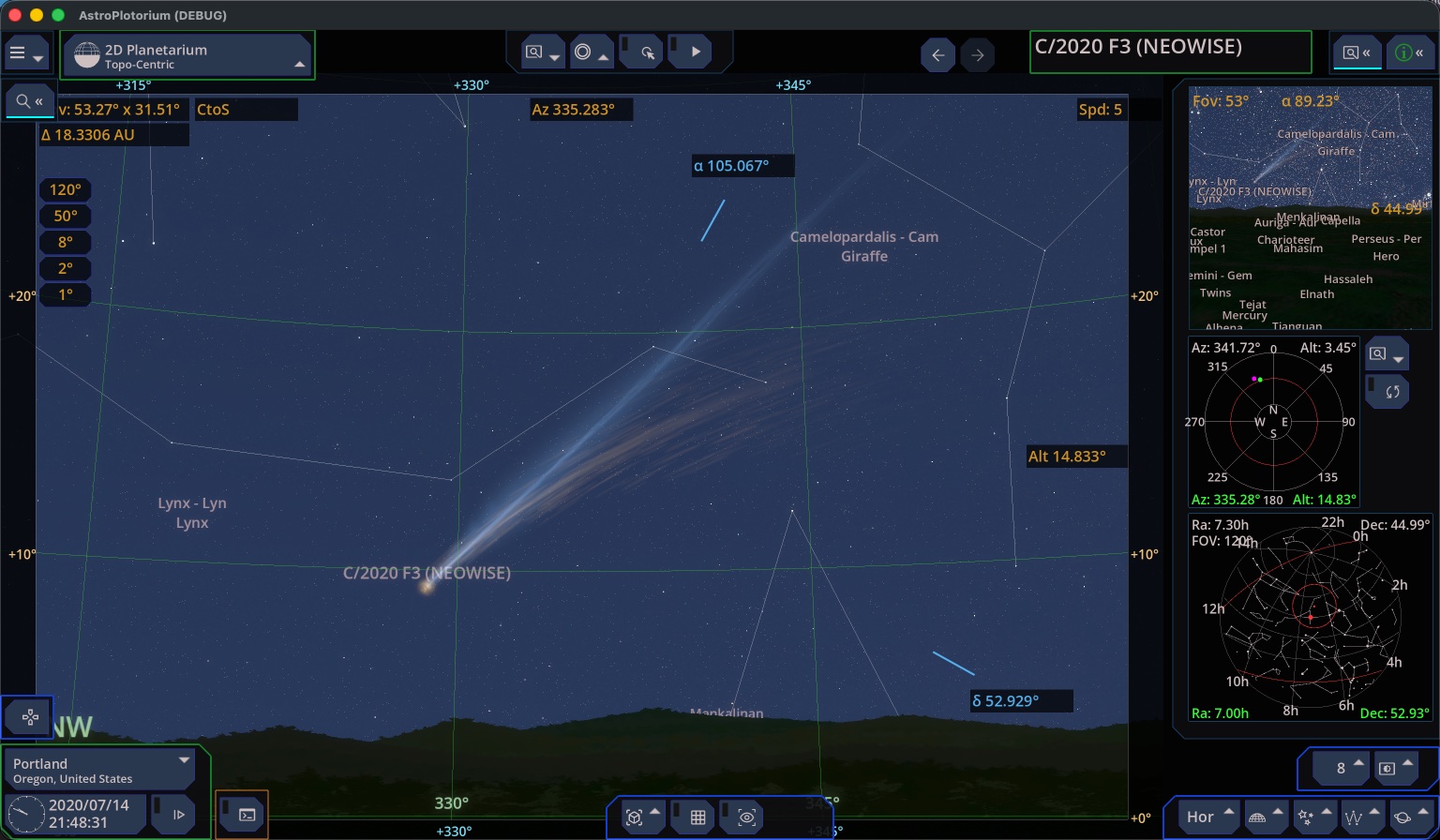
A comet near the Sun, with coma and tail. This frame is C/2020 F3 (NEOWISE) in July 2020. See The solar system.
Orbital Elements 3D
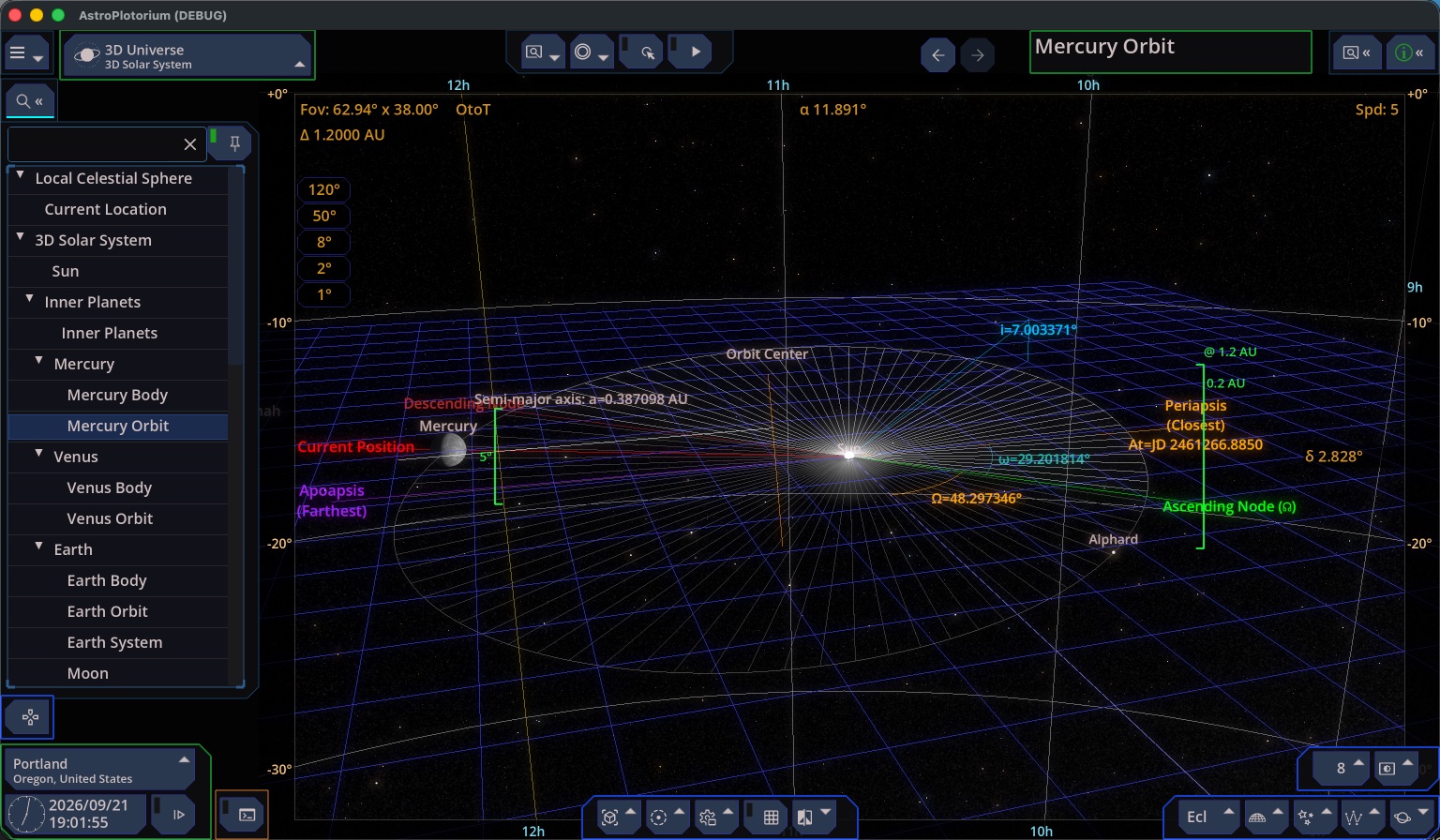
One orbit drawn with the elements you can read in the property panel: periapsis, apoapsis, and the nodes. See The selected target.
Planet Comparison
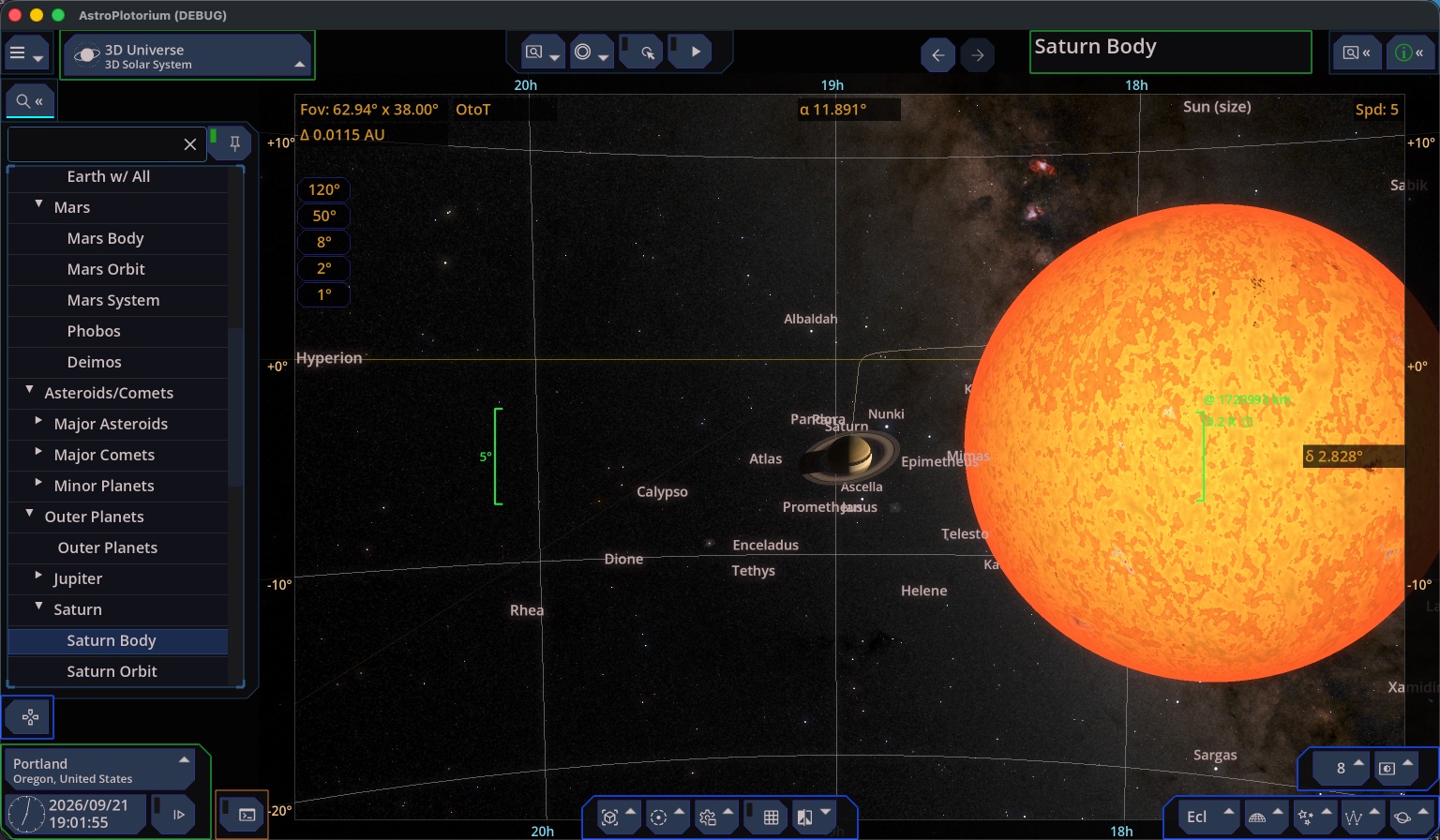
The selected body beside a size reference. Here Saturn is next to the Sun. See The solar system.
Star Comparison
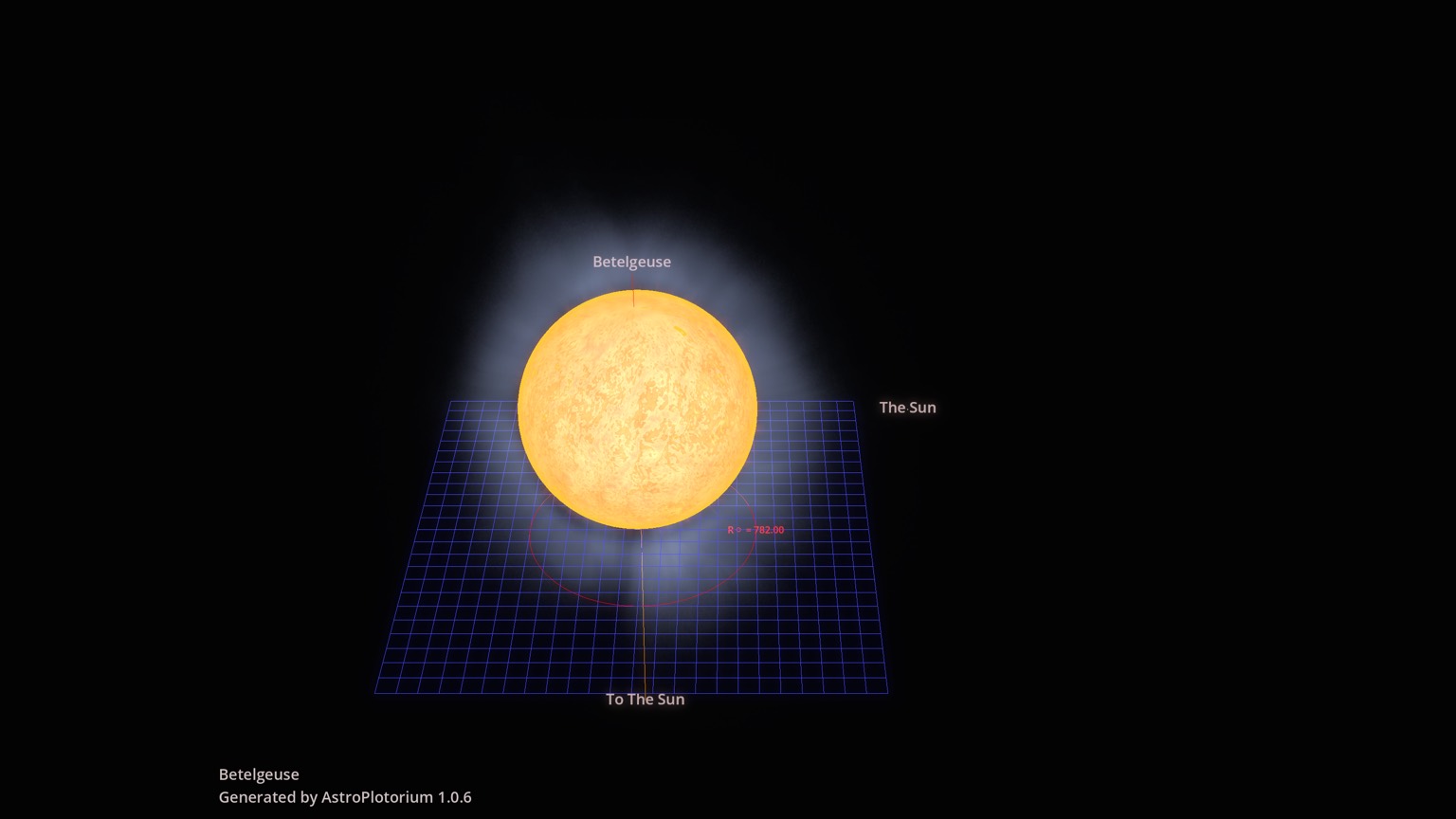
The same idea for a star. Betelgeuse next to the Sun. See Stars, constellations, and deep sky.
3D Orbit Flying on other planet
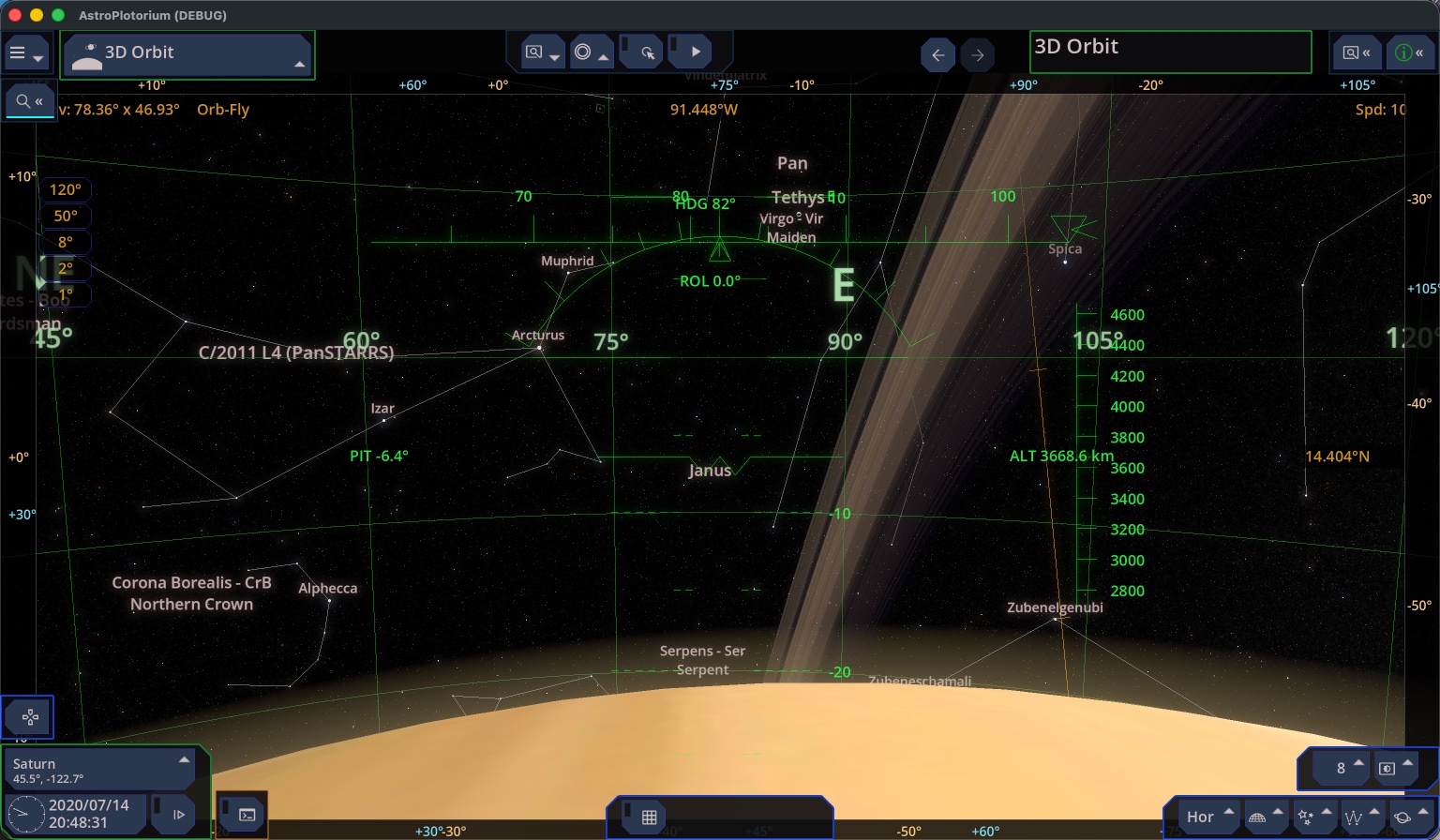
3D Orbit after Look from target on another body. The globe is Saturn, and the altitude scale follows that body’s radius. See 3D Orbit.